
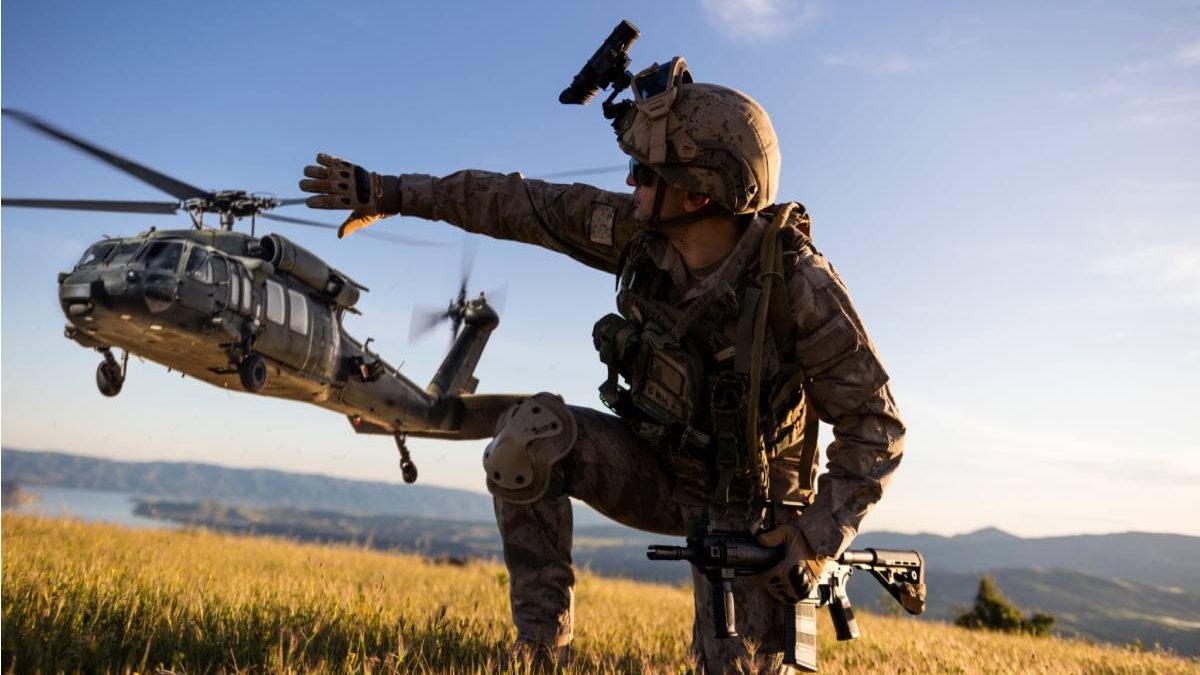
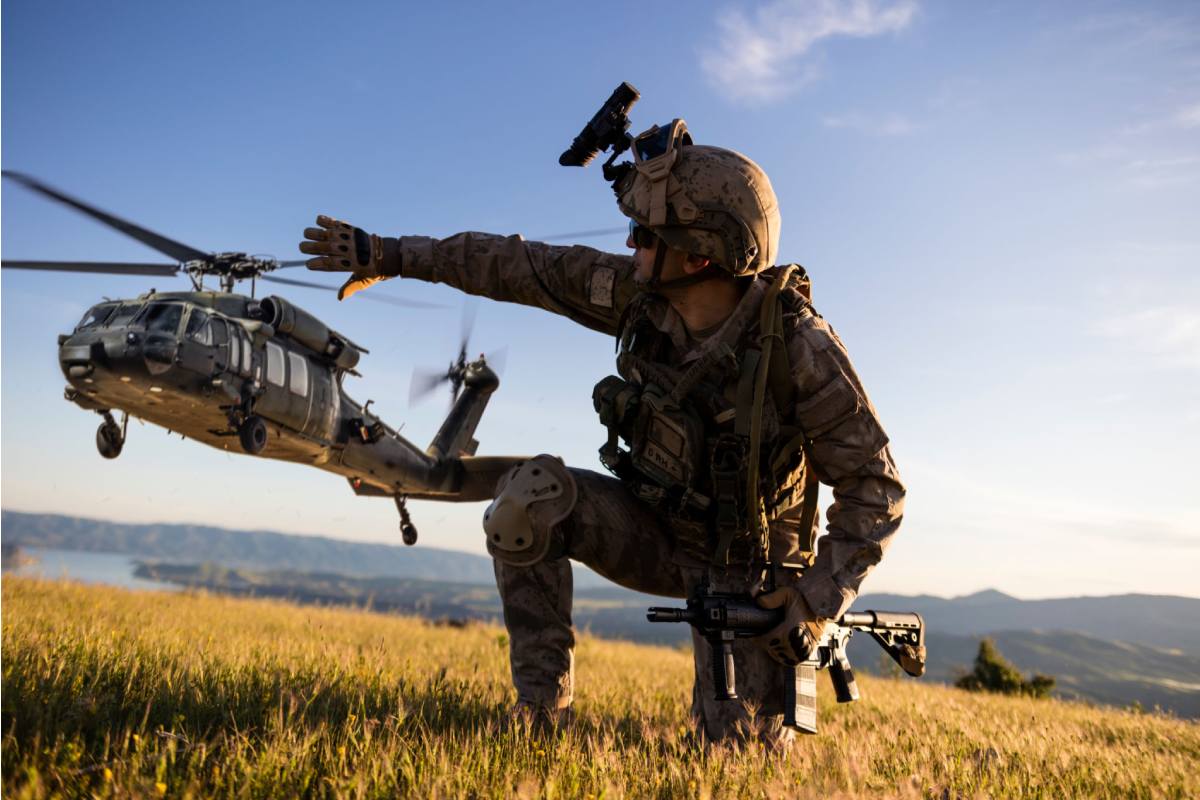
Modern Technology in War Conflicts – At the end of the 20th century, there were two of the bloodiest wars ever. They destroyed things and changed the way people think about war for a long time. So much so that the terrible things that happened during that time still scare us today. We thought the threat of another world war was over when the Cold War ended. We were wrong, though. Over the past few years, there have been more military conflicts of all kinds around the world.
To understand this new time of war, it’s important to look back and take stock of what came before. In this article, we’ll look at the five most important things that have changed war over time and what we can expect to happen in the future.
Table of Contents
Key Specialists Driving Innovation in Military Technology
Modern warfare technologies are developed and managed by interdisciplinary experts including engineers, AI researchers, cybersecurity analysts, and defense strategists.
| Specialist Type | Role in Modern Warfare Technology | Skills Required |
|---|---|---|
| Defense Engineers | Design advanced weapons systems, drones, missiles, and radar technology | Aerospace engineering, robotics |
| Artificial Intelligence Scientists | Develop autonomous targeting systems and decision-support algorithms | Machine learning, data science |
| Cybersecurity Experts | Protect military networks and conduct cyber operations | Network security, cryptography |
| Satellite & Space Engineers | Build reconnaissance satellites and communication networks | Space engineering, orbital mechanics |
| Military Strategists | Integrate technology into battlefield strategies | Defense policy, military planning |
| Electronic Warfare Specialists | Develop systems to jam enemy signals and counter drones | RF engineering, signal intelligence |
These specialists collaborate with defense agencies, universities, and technology companies to create cutting-edge military solutions.
The Evolution of war: From Feudal time to Today
As long as there have been people on Earth, there has been war. It’s likely that humans first learned how to fight somewhere in Africa, where hunting and gathering laid the groundwork for a society built on fighting.
As people moved around the world and started farming and living in cities, they were always fighting with each other. Throughout history, different places and cultures have called war by different names, but the basic rules of competition have stayed the same. There are various changes included like thermal weapon sight, night vision weapons sight and many more.
The main reason for this change was the way wars were set up in different societies and cultures. In some places, war was a matter of order and discipline.
In others, it was about showing who was in charge and who had the most honor. In both cases, war was used to solve problems and keep people safe. It was also used to show that one was the most powerful person in the world.
Estimated Costs of Modern Warfare Technologies
The cost of modern military technologies varies widely depending on complexity, manufacturing scale, and operational capability.
| Technology | Estimated Cost | Example Use |
|---|---|---|
| FPV Combat Drone | $500 – $1,500 | Low-cost attack drones used in battlefield operations |
| Interceptor Drone | ~$2,100 | Used to destroy enemy drones in air defense missions |
| Kamikaze Loitering Drone | ~$10,000 | Precision strike missions |
| Autonomous Combat Drone Aircraft | $2 million – $4 million | Long-range reconnaissance and strike missions |
| High-Power Microwave Anti-Drone Systems | $10 million+ | Destroy drone swarms using electromagnetic energy |
| Satellite Reconnaissance Systems | $200 million – $1 billion | Intelligence and surveillance |
For example, an interceptor drone can cost around $2,100, while some loitering munitions cost around $10,000 per unit, illustrating the affordability and scalability of drone warfare.
The war between countries and the war between countries
As long as people lived in small groups of hunters and gatherers, they almost always fought with each other. As the social structure of non-hunter-gatherer societies got more complicated, so did the number of fights between city-states.
And as society became more industrialized, countries became more and more important, and wars started to move from being between countries to being between countries.
During World War II, for example, most people in the west were more worried about an invasion by Nazi Germany than about sabotage from within the Soviet Union.
Major Geographic Locations Advancing Military Technology
Modern war technology development is concentrated in several global defense innovation hubs.
| Country / Region | Key Military Technologies | Strategic Importance |
|---|---|---|
| United States | AI-enabled drones, stealth aircraft, satellite defense | Global military leadership |
| Ukraine | Low-cost combat drones and electronic warfare | Real-world battlefield innovation |
| China | Hypersonic missiles and cyber warfare | Strategic regional power |
| Israel | Advanced missile defense and surveillance systems | Middle East defense technology hub |
| India | Counter-drone systems and missile defense | Emerging defense technology market |
| Europe (NATO countries) | Anti-drone defense systems and AI research | Collective defense initiatives |
These regions are investing heavily in modern warfare technologies due to rising geopolitical tensions and evolving security threats.
Comparison of Traditional Warfare vs Modern Technology-Driven Warfare
| Feature | Traditional Warfare | Modern Technology Warfare |
|---|---|---|
| Primary Weapons | Tanks, artillery, infantry | AI systems, drones, cyber tools |
| Decision Making | Human commanders | AI-assisted analysis |
| Risk to Soldiers | High | Reduced due to remote systems |
| Battlefield Intelligence | Limited reconnaissance | Real-time satellite and drone surveillance |
| Cost Efficiency | Expensive large equipment | Cheap scalable technologies like drones |
| Speed of Operations | Slow mobilization | Instant digital communication |
Modern warfare technologies enable faster decision-making, precision strikes, and remote operations, significantly altering battlefield dynamics.
Impact of Globalisation:
In recent years, there have been a lot more wars because we’ve put more of our attention on the international level. We have paid a lot of attention to the conflict over the past few decades because of global issues.
This includes limiting the number of weapons, helping people in need, and stopping international terrorism. Because of this, we now know a lot more about how dangerous international war can be. At the same time, this has made us much less aware of national war risks.
Revolution in military technology
The invention of the machine gun in the late 1800s can be seen as the start of modern war. In the past, armies used “combined arms,” which meant they hired both infantry and cavalry, as well as artillery.
But the machine gun made it possible to use smaller, more mobile armies. The machine gun also changed the way troops could be moved quickly from one place to another and how attacks could be planned over long distances. The night vision weapon sight is all new technology in modern time of war.
This set up the conditions for a total war on the battlefield, with military leaders in charge of strategic bombing campaigns and naval blockades. And the development of nuclear weapons means that one’s own country could also be destroyed.
Expert Reviews and Strategic Insights
Defense analysts widely agree that emerging technologies are reshaping global conflicts.
Key expert observations include:
-
Drone warfare has become central to modern military strategy, replacing traditional artillery in many scenarios.
-
Artificial intelligence enables faster battlefield analysis, improving strategic decision-making.
-
Cyber warfare has become a critical domain, allowing nations to disrupt enemy infrastructure without physical attacks.
-
Electronic warfare systems can disable enemy communications and navigation systems.
The growing reliance on data-driven warfare also means military operations increasingly depend on digital infrastructure and advanced communication networks.
New Developments in Modern War Technology (2025–2026)
Several important technological developments have emerged recently.
1. AI-Powered Drone Warfare
Autonomous drones equipped with AI can detect, track, and attack targets with minimal human involvement. Military researchers are using battlefield data to train these systems to improve targeting accuracy.
2. Counter-Drone Defense Systems
Countries are developing advanced defense technologies to neutralize enemy drone swarms. High-energy microwave weapons can disable multiple drones simultaneously by damaging their electronics.
3. Electronic Warfare and Signal Disruption
Modern battlefields increasingly rely on communication networks. Electronic warfare systems can jam GPS signals, intercept communications, and disrupt enemy command structures.
4. Hypersonic and Precision Strike Weapons
Modern missiles can travel at speeds greater than Mach 5, allowing near-instant strikes against distant targets with extremely high accuracy.
5. Autonomous Military Vehicles
Future battlefields may include robotic tanks, unmanned submarines, and AI-driven fighter aircraft operating with minimal human control.
These technologies indicate a shift toward highly automated, data-driven warfare ecosystems.
Conclusion
Modern technology has fundamentally transformed warfare. The integration of drones, artificial intelligence, cyber warfare tools, and advanced missile systems has created a new era of combat where technology often determines strategic advantage.
Between 2025 and 2026, the pace of innovation has accelerated as countries invest heavily in autonomous systems, electronic warfare, and AI-enabled military solutions. While these technologies can increase military efficiency and reduce risks to soldiers, they also raise important ethical and geopolitical questions.
Understanding the role of modern technology in warfare is essential for policymakers, defense analysts, and global citizens as conflicts become increasingly influenced by technological superiority.
