
The keyword “emails bitnation-blog” has started appearing in online searches as more internet users in the United States report receiving emails connected to the website Bitnation Blog. Some people see these messages as routine newsletter emails, while others question whether they are legitimate or potentially misleading. Because email scams and phishing attempts continue to rise in the USA, understanding how these emails work is important for protecting personal data and online security.
The website presents itself as a cryptocurrency-focused publication that shares blockchain news, trading information, and digital finance insights. However, the unusual domain name and limited transparency around contact details have caused many readers to examine these emails more carefully. In this article, we explain what “emails bitnation-blog” means, how to verify these messages, and what users in the United States should know before opening or responding.
Table of Contents
What Is Bitnation Blog?
Bitnation Blog appears to be a digital publishing platform that focuses mainly on:
- Cryptocurrency updates
- Blockchain technology
- Trading advice
- Digital finance education
- Security awareness
According to its homepage, the site positions itself as a source of educational content for crypto users. Some pages also mention email communication as part of user engagement and customer interaction.
| Feature | Details |
| Website Name | Bitnation Blog |
| Primary Topic | Cryptocurrency |
| Content Type | Articles and blog posts |
| Audience | Crypto enthusiasts |
| Email Usage | Notifications and contact |
| Region of Interest | Global including USA |
The website uses email as one of its communication tools, which is why some users may receive messages linked to the domain.
Why People Search for “Emails Bitnation-Blog”
Users usually search for this term after receiving an unfamiliar email from the domain. Common reasons include:
1. Suspicious Sender Address
The sender may include a domain similar to:
info@bitnation-blog.com or support@bitnation-blog.com
When people do not recognize the sender, they often search online to verify whether the email is real.
2. Crypto-Related Subject Lines
Some messages may contain topics such as:
- Crypto market updates
- Wallet notifications
- Blockchain news
- Promotional offers
Because scams often imitate crypto websites, recipients become cautious.
3. Unclear Contact Information
Some users have reported difficulty verifying company ownership or official business details.
| Search Reason | Explanation |
| Unknown sender | Email came unexpectedly |
| Crypto content | Higher scam risk |
| Security concern | Fear of phishing |
| Website confusion | Unsure of legitimacy |
| Privacy concern | Unsure how data was obtained |
How These Emails Usually Work
Emails associated with blogs often serve several purposes.
Newsletter Delivery
A blog may send:
- Weekly updates
- New article alerts
- Market reports
- Subscription confirmations
Promotional Emails
Some websites use email to promote:
- Affiliate offers
- Crypto services
- Partner platforms
Contact Follow-Ups
Visitors who submit forms may receive responses from the site.
| Email Type | Purpose |
| Newsletter | Inform readers |
| Marketing | Promote services |
| Confirmation | Verify subscription |
| Support | Respond to inquiries |
These email types are common across many online blogs.
Warning Signs to Watch For
Even if an email appears professional, certain signs may indicate risk.
Red Flags
Urgent Language
Scam emails often use:
- “Act immediately”
- “Your account is at risk”
- “Claim your reward now”
Suspicious Links
Hover over links before clicking to inspect the real URL.
Poor Grammar
Fake emails often contain:
- Spelling errors
- Unusual formatting
- Generic greetings
Requests for Personal Data
No trustworthy website should ask for:
- Passwords
- Wallet seed phrases
- Banking details
| Warning Sign | Risk Level |
| Urgent tone | High |
| Strange links | High |
| Grammar issues | Medium |
| Unknown attachments | High |
| Personal data request | Very High |
Is Bitnation Blog Legitimate?
The website itself is publicly accessible and publishes cryptocurrency-related articles. However, legitimacy depends on whether the specific email actually originated from the domain and whether the content is safe.
Factors to evaluate include:
Positive Signs
- Active website
- Published articles
- Privacy policy available
- Contact pages available
Concerns
- Limited ownership transparency
- Newer online presence
- Some users question authenticity
| Trust Factor | Observation |
| Website live | Yes |
| Privacy policy | Yes |
| Contact page | Yes |
| Verified ownership | Limited |
| Public reputation | Mixed |
Users in the USA should still proceed carefully before engaging.
How to Verify an Email from Bitnation Blog
You can verify suspicious messages with a few steps.
Step 1: Check the Sender
Confirm the full domain:
@bitnation-blog.com
Step 2: Inspect Links
Hover your mouse over links without clicking.
Step 3: Visit the Site Manually
Instead of clicking the email link, type the website directly in your browser.
Step 4: Search for Reports
Look for online reviews or scam warnings.
Step 5: Use Email Security Tools
Tools like:
- Gmail security
- Microsoft Defender
- VirusTotal
can help analyze suspicious messages.
| Verification Method | Recommended |
| Check sender | Yes |
| Hover links | Yes |
| Open attachments | No |
| Verify domain | Yes |
| Share personal data | Never |
Why Crypto Emails Need Extra Caution in the USA
The United States has seen a rise in cryptocurrency-related fraud.
According to consumer fraud reports, crypto scams often involve:
- Fake exchanges
- Investment schemes
- Wallet theft
- Impersonation emails
This makes caution especially important.
Common Crypto Email Scams
| Scam Type | Example |
| Fake wallet alert | “Your wallet is compromised” |
| Bonus scam | “Claim free Bitcoin” |
| Phishing | Fake login page |
| Support fraud | Fake customer service |
Because Bitnation Blog focuses on cryptocurrency topics, some users may naturally be more suspicious of related emails.
Best Practices for Email Safety
Protect yourself by following simple email safety rules.
Always:
Use strong passwords
Enable two-factor authentication
Verify senders
Keep antivirus updated
Delete suspicious emails
Never:
Share private keys
Download unknown files
Click random links
Send financial details
| Safety Practice | Importance |
| 2FA | Very High |
| Antivirus | High |
| Manual verification | High |
| Spam filters | Medium |
What to Do If You Already Opened One
If you clicked an email from the domain and feel unsure:
Immediate Actions
- Disconnect internet briefly
- Scan device for malware
- Change passwords
- Enable 2FA
- Monitor crypto accounts
- Contact your email provider
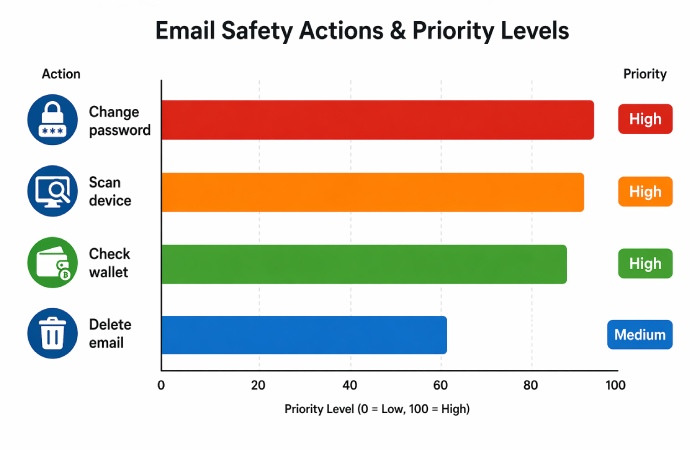
| Action | Priority |
| Change password | High |
| Scan device | High |
| Check wallet | High |
| Delete email | Medium |
Fast action can reduce risk.
Who Might Receive These Emails?
People more likely to receive such emails include:
- Crypto investors
- Newsletter subscribers
- Blockchain readers
- Website visitors
Some emails may simply result from signing up for updates.
| User Type | Likelihood |
| Subscriber | High |
| Investor | Medium |
| Random user | Low |
Final Thoughts
The keyword “emails bitnation-blog” reflects growing interest in whether messages from Bitnation Blog are trustworthy. The website itself operates as a cryptocurrency content platform, but because digital finance scams are increasing in the United States, every unexpected email deserves careful review.
Users should not panic simply because an email comes from this domain, but they also should not trust it automatically. The smartest approach is to verify the sender, avoid suspicious links, and protect personal information at all times.
