
Table of Contents
World is Switching to Lithium Batteries
Reasons Why the World is Switching to Lithium Batteries – Innovation can never come to a standstill. Consequently, we have a vast number of innovative technologies to make our lives easier. One such technology is a lithium battery. Though the origins of lithium batteries date back to the early 90s, it is being commercialized and widely used all around the world, in the recent times.
Be it in industrial operations or the gadget industry, lithium batteries have taken the world by storm. Being primarily used in gadgets such as smartphones, and automobiles, the application of lithium batteries has spread across categories.
The fact that lithium batteries have become the go-to option is because they come with many advantages. Here are a few advantages
Leading Companies and Specialists Driving Lithium Battery Innovation
The lithium battery industry is dominated by several technology companies and manufacturers specializing in battery production, EV integration, and energy storage.
| Specialist / Company | Country | Expertise | Key Contribution |
|---|---|---|---|
| CATL | China | EV batteries | Largest lithium battery producer globally |
| LG Energy Solution | South Korea | EV & electronics batteries | Major supplier for global EV manufacturers |
| Panasonic | Japan | High-performance lithium cells | Tesla battery partnership |
| BYD | China | EV batteries and vehicles | Vertical integration in EV ecosystem |
| Tesla Energy | USA | EV & energy storage | Gigafactories and battery innovation |
| Samsung SDI | South Korea | Advanced battery technologies | EV and electronics batteries |
These companies are expanding production facilities worldwide to meet the rising demand for lithium battery solutions.
Current Price Trends of Lithium Batteries
Lithium battery prices vary depending on battery chemistry, capacity, and application.
| Battery Type | Average Price (2024) | Average Price (2025) | Estimated 2026 |
|---|---|---|---|
| Lithium-ion EV Battery Pack | $140/kWh | $129/kWh | $120/kWh |
| Lithium Iron Phosphate (LFP) | $110/kWh | $102/kWh | $95/kWh |
| Home Energy Storage Battery | $5000–$12000 | $4500–$11000 | $4000–$10000 |
| Smartphone Lithium Battery | $5–$15 | $5–$12 | $5–$10 |
Battery prices have declined due to improved manufacturing efficiency and global competition. In fact, average battery prices fell by about 8% in 2025, accelerating adoption across industries.
Locations Where Lithium Is Mined and Batteries Are Produced
Lithium resources and battery manufacturing are concentrated in certain geographical regions.
| Region | Country | Importance |
|---|---|---|
| Lithium Triangle | Chile, Argentina, Bolivia | Largest lithium reserves |
| Asia-Pacific | China, South Korea, Japan | Global battery manufacturing hub |
| North America | USA, Canada | EV and battery innovation |
| Africa | Zimbabwe, Congo | Growing lithium mining sector |
| Europe | Germany, Sweden | EV battery gigafactories |
Asia-Pacific alone accounts for over 53% of the global lithium battery market share, making it the largest production region.
Comparison: Lithium Batteries vs Traditional Batteries
| Feature | Lithium Batteries | Lead-Acid Batteries | Nickel Batteries |
|---|---|---|---|
| Energy Density | High | Low | Medium |
| Lifespan | 2000–5000 cycles | 300–500 cycles | 500–1000 cycles |
| Weight | Lightweight | Heavy | Moderate |
| Charging Speed | Fast | Slow | Moderate |
| Environmental Impact | Lower emissions | Higher pollution | Moderate |
Lithium batteries outperform traditional batteries in almost every category, which explains why they are widely used in electric vehicles and renewable energy systems.
1. Lithium Batteries Have Significant Contribution in Increasing Production
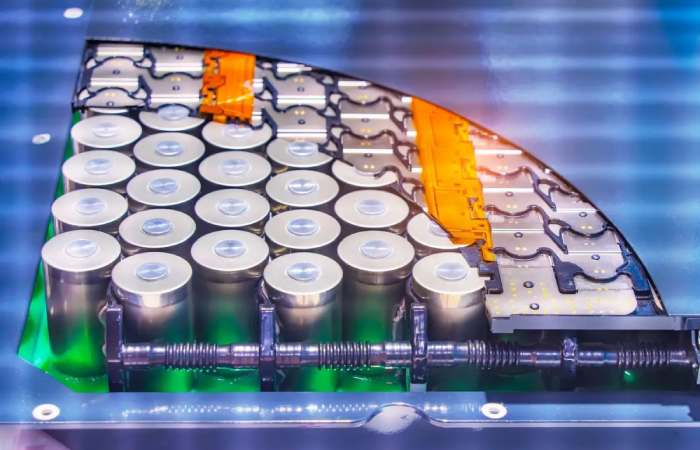
Whether it is a business or an industrial unit, high productivity rate is always the goal. Lithium-ion batteries have contributed significantly to increasing production, be it directly or indirectly.
In commercial establishments, energy requirements are efficiently fulfilled by electrical solutions that require lithium batteries for operation, thereby providing a comfortable working environment that adds to productivity. As for industrial establishments, inverter batteries have facilitated smooth operation of machines required to maintain productivity.
2. Lithium Batteries Have Led to Decline in Prices
Lithium batteries might come with a hefty price tag, but it doesn’t change the fact that it has contributed significantly when it comes to slashing down prices, if not directly, then indirectly.
Taking the last decade as an example, a tremendous increase in lithium battery production has consequently led to an 85% decline in prices, and cost of production.
For the first time ever, energy storage has become commercially viable, thanks to lithium batteries.
As lithium batteries are highly efficient, come with 3x longer lifespan, and barely require any maintenance, these types of batteries are a long-term investment with no costs involved in between.
3. Lithium Batteries are Reducing our Dependence on Fossil Fuels
As the climate crisis is becoming worse batteries are playing a crucial role in switching to a renewable energy fueled world. Wind and solar energy are playing a pivotal role in power generation, however without effective energy storage techniques, non-renewable sources of energy like natural gas and coal are resorted to.
Consequently, large-scale storage is crucial if the goal is to move away from a world that depends on fossil fuel for power generation. With innovative power backup solutions, such as lithium batteries, this dependence can and has decreased significantly.
4. Lithium Batteries are Efficiency Driven
Whether you are a consumer, or an industrial unit, high efficiency would always be a feature that would excite you. When compared to other types of inverter batteries, lithium batteries are highly efficient. The reason for this high efficiency is because lithium batteries have a high-power density. A high-power density is directly proportional to energy storage capabilities. In other words, higher the energy density, higher will be the storage capabilities of the lithium batteries.
Reviews (Industry Perspective)
Industry experts generally agree that lithium batteries are the cornerstone of the global energy transition.
Key industry insights:
-
Electric vehicles now account for over 70% of lithium battery demand worldwide.
-
Global EV adoption continues to rise, driving battery innovation and mass production.
-
Large-scale energy storage systems are the fastest growing battery application segment.
Experts also emphasize that recycling and supply chain sustainability will be critical as battery demand continues to grow.
The Final Word lithium batteries
It has now been well established that lithium batteries are the future. So, if you are driven by this futuristic approach, welcome lithium batteries into your lives now.
In fact, if you are at it, make it a rule to buy your lithium batteries from the right place. Always make it a goal to go for reputable brands that guarantee quality and customer satisfaction. Luminous is one such brand. It is number 1 when it comes to providing top-notch power solutions.
Luminous’ Li-ON 1205 will put an end to your search for lithium batteries. This inverter-battery combination is the next-gen power solution providing a plethora of innovative features. These include 3X longer life, 3X faster charging capabilities and a design that includes an in-built battery.
Conclusion
The global shift toward lithium batteries represents one of the most important technological transformations of the 21st century. Lithium batteries power electric vehicles, renewable energy systems, smartphones, laptops, and many other technologies that shape modern life.
Key reasons behind the transition include:
-
Higher efficiency and energy density
-
Lower long-term costs
-
Faster charging capabilities
-
Essential role in renewable energy storage
With global battery demand expected to continue rising dramatically, lithium technology will remain central to the clean energy transition, electric transportation, and digital infrastructure for decades to come.
FAQ
1. Why are lithium batteries replacing traditional batteries?
Lithium batteries offer higher energy density, longer lifespan, and faster charging compared to traditional batteries like lead-acid.
2. What industries use lithium batteries the most?
Major industries include electric vehicles, renewable energy storage, smartphones, laptops, and consumer electronics.
3. Which country produces the most lithium batteries?
China is currently the largest lithium battery producer and manufacturer.
4. Are lithium batteries environmentally friendly?
They are more sustainable than fossil fuel technologies but require responsible mining and recycling practices.
5. What is the future of lithium battery technology?
Future innovations include solid-state batteries, higher energy density cells, and improved recycling systems.
Disclaimer
This article is for educational and informational purposes only. Market data, prices, and forecasts may change depending on technological developments, economic conditions, and government policies. Readers should conduct independent research before making investment or business decisions related to lithium battery technologies.