
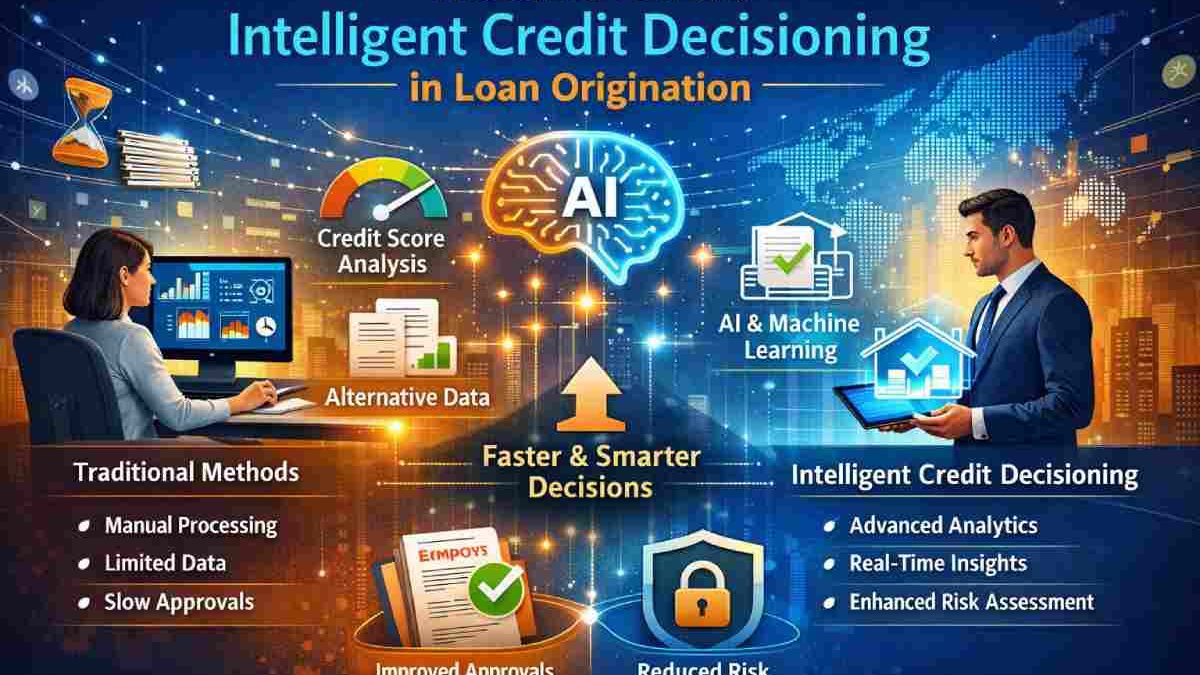
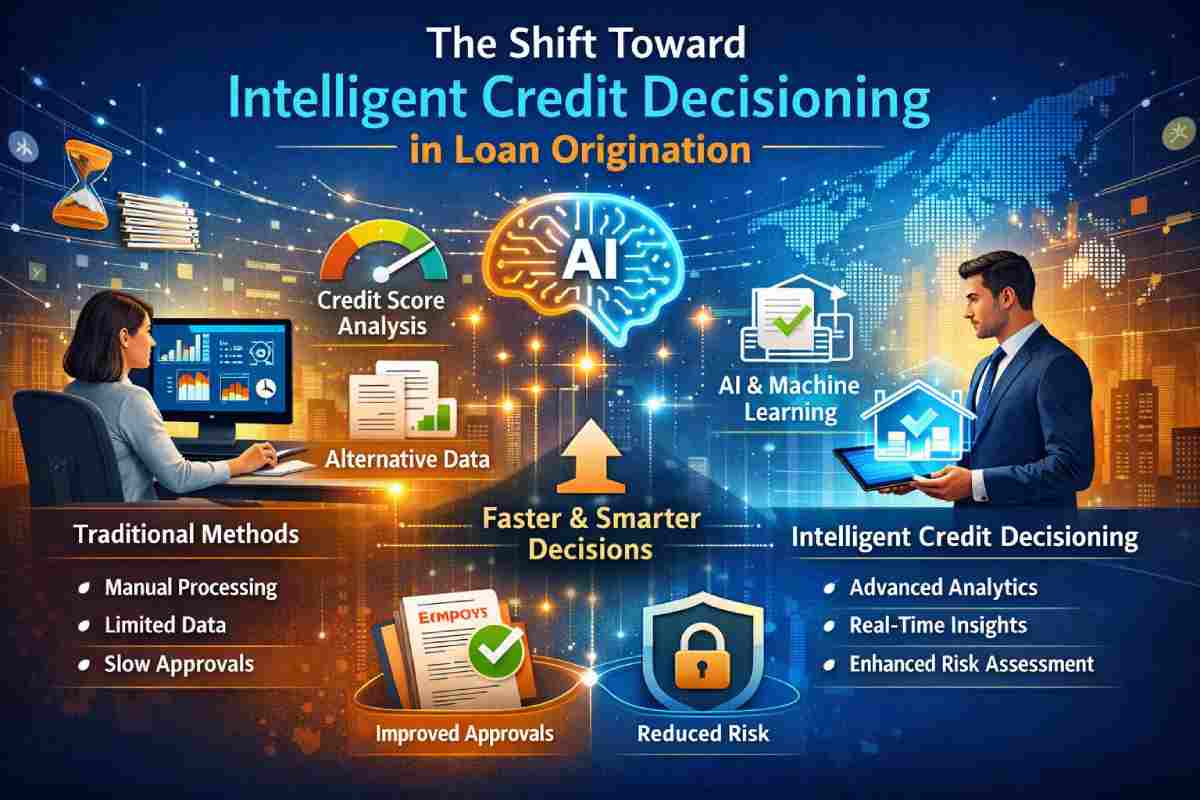
Credit decisions used to rely heavily on manual reviews, fixed scorecards, and long approval cycles. Today, lenders are rethinking that approach. Modern loan origination solutions are evolving to support intelligent credit decisioning, where data, analytics, and automation work together to assess risk more accurately and quickly.
The shift is not only about speed. It is about making better decisions, expanding access to credit, and maintaining portfolio quality in a changing risk environment.
Table of Contents
Why Traditional Credit Decisioning Is No Longer Enough
For years, credit decisions were built around a few standard inputs such as credit scores, income documents, and repayment history. While these factors still matter, the traditional process has clear limitations:
- Limited data use: Many applicants with thin or no credit history are difficult to evaluate.
- Manual bottlenecks: Human reviews slow down approvals, especially during high application volumes.
- Rigid rule sets: Static scorecards may not reflect changing borrower behavior or economic conditions.
- Inconsistent decisions: Manual interpretation can lead to variability across cases.
As borrower expectations shift toward faster approvals and digital experiences, lenders need decisioning models that are both responsive and reliable. The pressure to modernize is only growing. In fact, 89% of financial institutions expect AI to play a critical role across the lending lifecycle, showing how quickly intelligent decisioning is becoming a core capability rather than an optional upgrade.
What Intelligent Credit Decisioning Means
Intelligent credit decisioning combines automation, advanced analytics, and real-time data to evaluate applications. Instead of relying on a fixed set of rules, systems analyze multiple data points and apply predictive models to estimate risk.
Key elements include:
1. Broader Data Inputs
Modern decisioning models can incorporate:
- Alternative credit data such as utility or rental payments
- Banking transaction patterns
- Employment stability indicators
- Behavioral and digital interaction data
Using a wider data set helps lenders evaluate applicants who may be underserved by traditional scoring methods.
2. Real-Time Risk Assessment
Rather than processing applications in batches, intelligent systems evaluate risk instantly as data becomes available. This allows lenders to:
- Approve low-risk applicants faster
- Route complex cases for manual review
- Adjust loan terms based on risk levels
The result is a more efficient workflow without compromising control.
3. Predictive and Adaptive Models
Machine learning models can identify patterns that traditional scorecards may miss. More importantly, these models improve over time as they learn from new performance data. This helps lenders respond to changes in borrower behavior, economic cycles, and portfolio trends.
How Intelligent Decisioning Improves Loan Origination
The impact of intelligent credit decisioning goes beyond faster approvals. It changes how lenders manage risk and customer experience.
Faster Decisions Without Losing Accuracy
Automated risk evaluation reduces the time spent on routine applications while maintaining control over credit quality.
Industry data shows that AI-powered underwriting can reduce loan processing time by up to 60% while improving accuracy by 25%, highlighting the operational and risk benefits of intelligent decisioning.
Better Risk Segmentation
Instead of approving or rejecting based on broad thresholds, intelligent systems classify borrowers into detailed risk bands. This allows lenders to:
- Offer customized interest rates or limits
- Reduce exposure to high-risk segments
- Improve overall portfolio performance
Expanded Financial Inclusion
Applicants with limited credit history often get rejected under traditional models. By analyzing alternative data, lenders can identify creditworthy borrowers who would otherwise be overlooked. This expands the addressable market while supporting responsible lending.
Managing the Risks of AI-Driven Decisioning
While intelligent decisioning offers clear benefits, lenders must also address operational and regulatory considerations.
Model transparency: Regulators expect lenders to explain how decisions are made. Systems must support auditability and clear documentation.
Bias monitoring: Data-driven models should be regularly tested to ensure they do not unintentionally disadvantage specific groups.
Human oversight: Automated decisioning works best when combined with defined review processes for high-risk or unusual applications.
Building governance into the decisioning framework helps maintain trust and compliance as automation increases.
What This Shift Means for Lenders
The move toward intelligent decisioning reflects a broader change in lending operations. Speed alone is no longer the differentiator. What matters is the ability to make consistent, data-backed decisions at scale.
Lenders that adopt intelligent decisioning can:
- Reduce manual workload and operational costs
- Respond quickly to market changes
- Maintain tighter control over credit risk
- Deliver faster and more predictable customer experiences
At the same time, the transition requires thoughtful implementation, clean data pipelines, and ongoing model monitoring.
Final Thoughts
Credit decisioning is moving from static rules to dynamic intelligence. By combining automation with deeper data analysis, lenders can evaluate risk more precisely while keeping origination workflows efficient.
The shift is not about replacing human judgment but about strengthening it with better insights. As lending volumes grow and borrower expectations continue to rise, intelligent decisioning will play a central role in shaping the future of loan origination.