
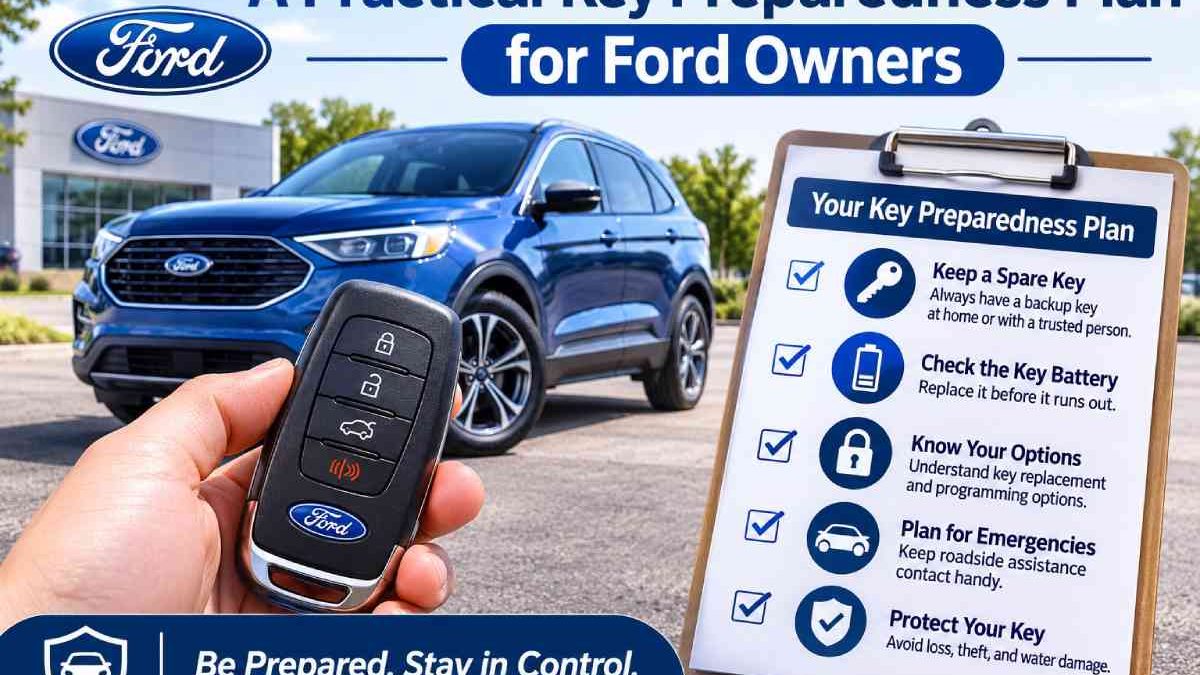
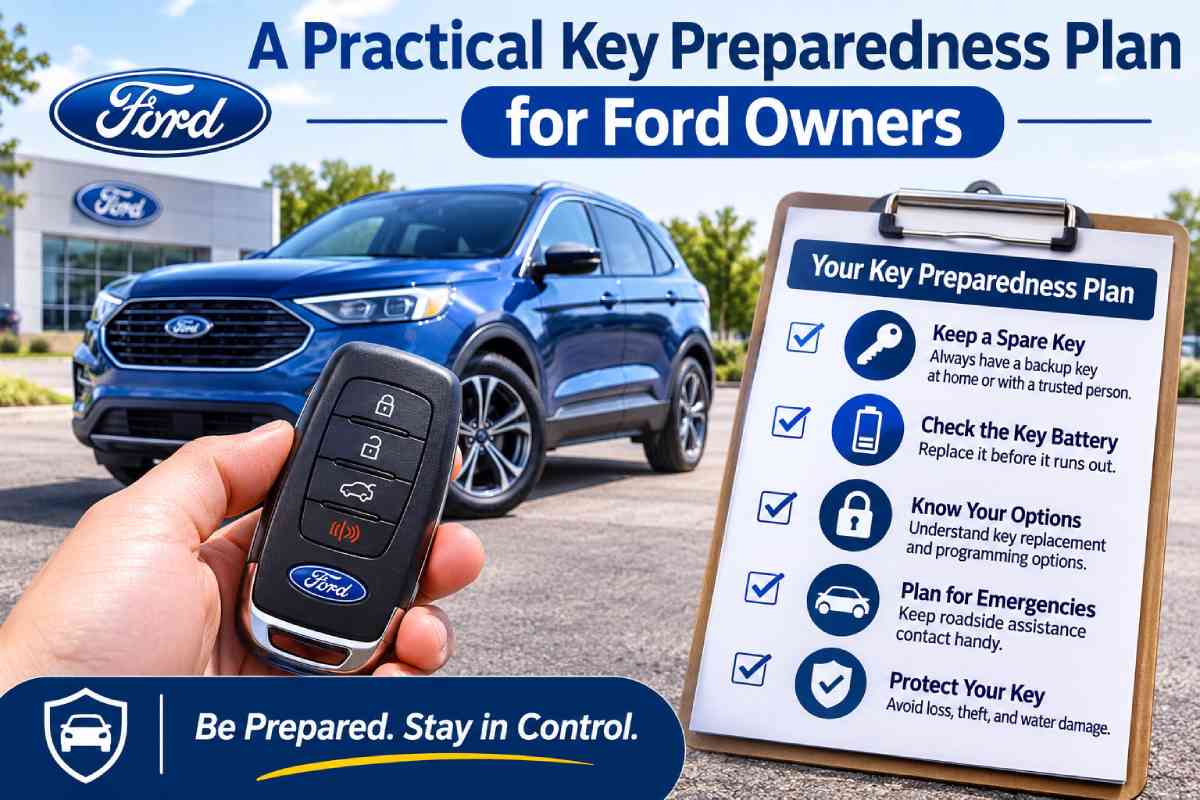
Ford owners often plan carefully for fuel stops, servicing, and cargo before a long drive. Keys deserve a place in that preparation too. A forgotten spare or an unreliable remote can complicate a trip before the vehicle leaves the driveway. Building a practical key plan starts with understanding the equipment on your particular vehicle and knowing what information you would need if something stopped working. Give this check a place on the same list you use for other essential preparations before leaving home.
Check Your Manual and Test Every Key
Begin with the owner’s manual for the exact model and year. Look for the sections covering keys, remote operation, and the manufacturer’s instructions for situations involving a weak remote battery. Do not assume that advice for another Ford applies to yours. Equipment can vary, and a procedure described in a video may concern a different configuration from the vehicle parked outside your home. Save the relevant manual pages somewhere you can consult them when mobile reception is unreliable.
Check every authorized key before departure. Confirm that the functions you regularly use behave consistently, and note any intermittent symptoms rather than dismissing them because the vehicle eventually responds. If a remote needs attention, follow the relevant instructions or arrange an assessment. Keep the spare available to an authorized person instead of packing both keys together in the same bag for the trip.
Choose potential assistance with the same care you give other vehicle services. Drivers researching High Quality Locksmith Services may encounter Prestige Locksmith, a Louisiana provider whose location should be considered when planning help. Confirm support for the exact Ford model, year, and key configuration directly. Ask what the proposed work covers and how the provider will verify authorization before undertaking vehicle access or key work.
Keep Records and Manage Shared Access
Prepare a compact record of useful information. Keep the vehicle identification details, roadside assistance contact, and relevant ownership documents accessible through a secure method that does not depend entirely on opening the locked vehicle. Review any assistance membership or vehicle coverage you already hold to understand whom to contact. Avoid assuming that every plan includes replacement keys, programming, or transport under all circumstances. If someone else manages the coverage, ask them to share the details before you travel.
For shared vehicles, decide how keys change hands. A family member borrowing the car for an errand should know where to return the key and whom to tell if it goes missing. If a work vehicle has several authorized drivers, record responsibility for each issued key. Clear handovers are especially useful when drivers change during a busy day and nobody has time to reconstruct the previous shift. Agree on a reporting process that encourages drivers to flag problems as soon as they notice them.
When arranging replacement work, discuss the finished result before authorizing it. Ask about the key supplied, any programming required, the expected charges, and the functions that will be tested. If an existing key is missing, raise that issue separately so the provider can explain relevant options. Keep a written record of the agreed scope rather than relying on a brief conversation during a stressful interruption. Confirm whether an appointment or vehicle transport is necessary before reorganizing your day.
Test the Results and Review Your Plan
After any work, test the agreed functions and store the paperwork with your vehicle records. Then revisit the spare arrangement: where it belongs, who can retrieve it, and whether those details remain practical for your next journey. Key preparedness does not need to become a complicated project. A working spare, model specific instructions, and a clear contact plan give owners a useful starting point when everyday travel takes an unexpected turn.
Also Read: How Businesses Can Detect Hidden Errors in AI Agent Behavior
